
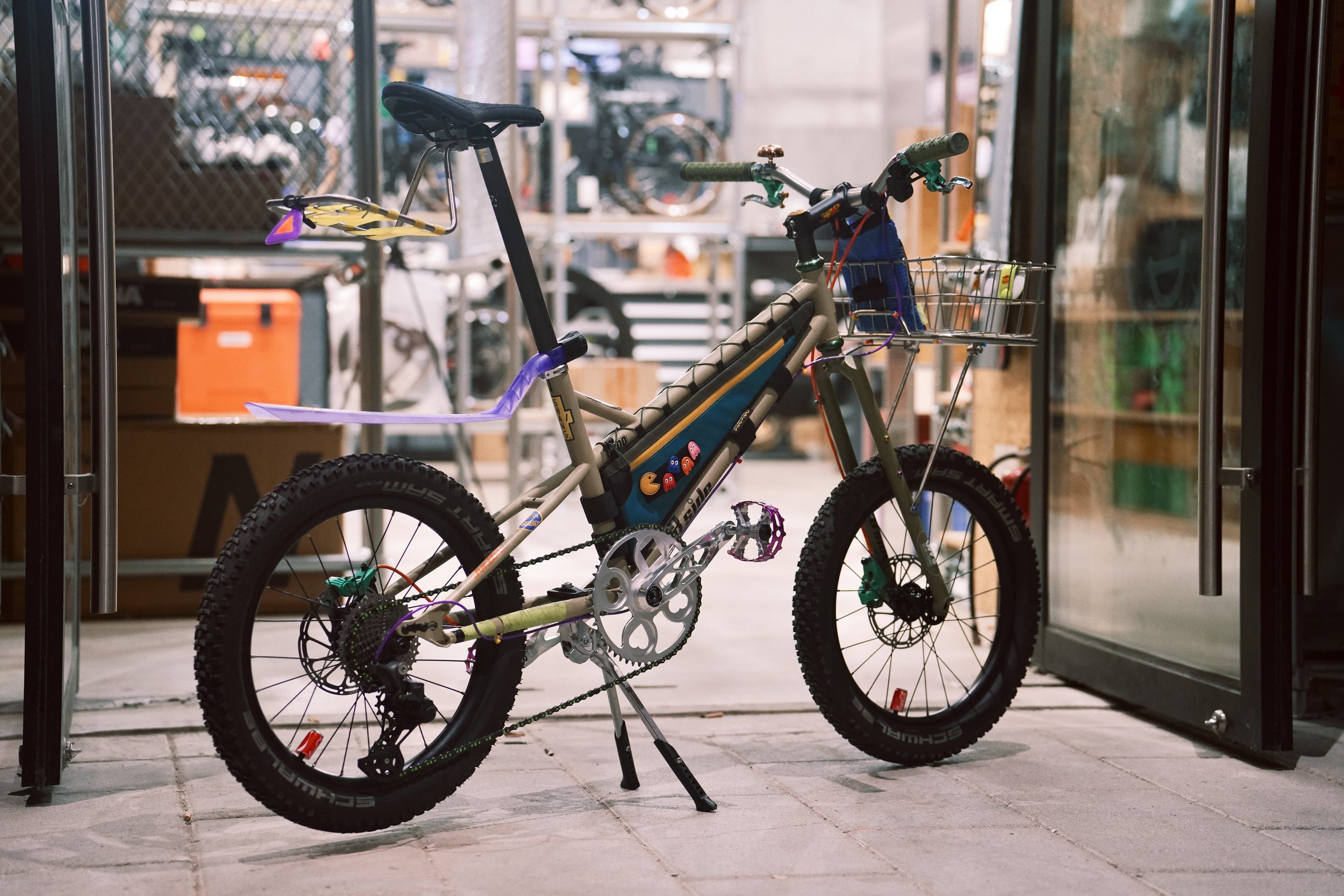
There are plenty of cyclists in Shanghai, but not many turn a small-wheeled bike into a rolling personal manifesto. Hoodie, cargo pants, a pair of beaten-up Converse, straddling his B side Capo — meeting Mr. Peng for the first time, you would hardly connect him with the title of "studio owner," until you look closely at every detail of the bike: desert-yellow frame, olive fork, teal brake calipers, purple pedals, and a row of Pac-Man ghost pins on the frame bag.
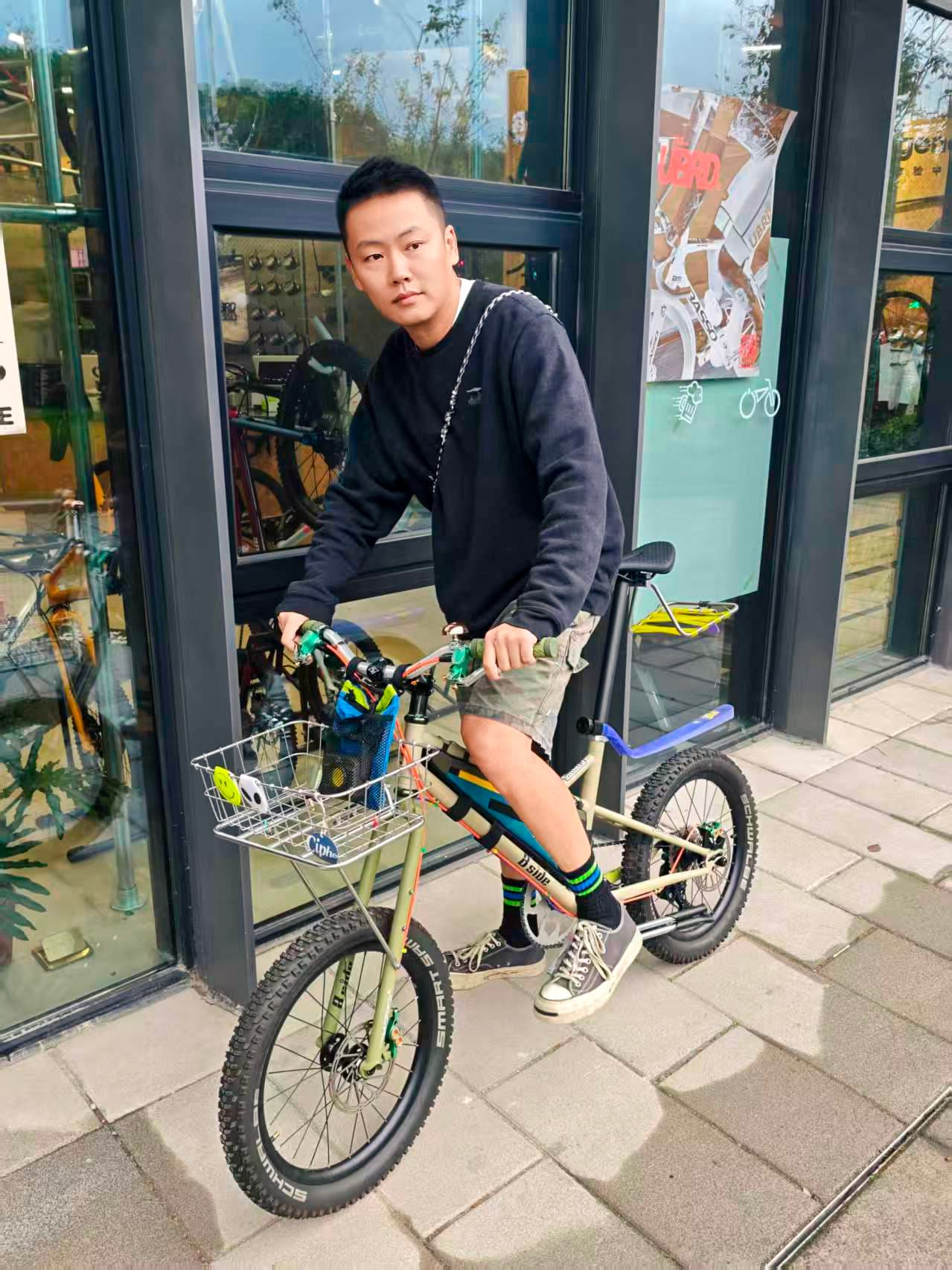
Weekdays are spent among coffee at the studio; when the shutter comes down at dusk he swings a leg over the small wheels and disappears into the plane-tree streets. Weekends the route stretches further — along Suzhou Creek, or straight to a friend's little bar. The road bike is his "serious speed machine." The Capo is the one he keeps for the city. "The road bike is for going far," Mr. Peng says of the division of labour. "This one is for getting through the day."
1. Why a small wheel
Before the Capo, Mr. Peng's stable was not short of bikes. But moving daily between cafés, the studio and bars, he came to a simple conclusion: a bike that truly blends into everyday life has to fit in the lift, park by the shop door, and be carried upstairs — and it has to look good enough under the shop lights.
"In Shanghai, the size of your bike is the size of your life," he says. "A mini-velo doesn't try to look tough, but it swallows everything — a bag of beans, a bottle of wine, a whole evening."
The Capo's compact steel geometry and 20-inch wheels land right in the middle of that requirement: a short wheelbase that slips through traffic, and a steel frame that damps vibration with enough warmth to turn the knock of brick paving into something closer to rhythm. This desert-yellow build simply grows its own temperament on top of the frame's factory poise.
2. Build details: candy logic on a tough little chassis
The bell goes on first, and it sets the tone
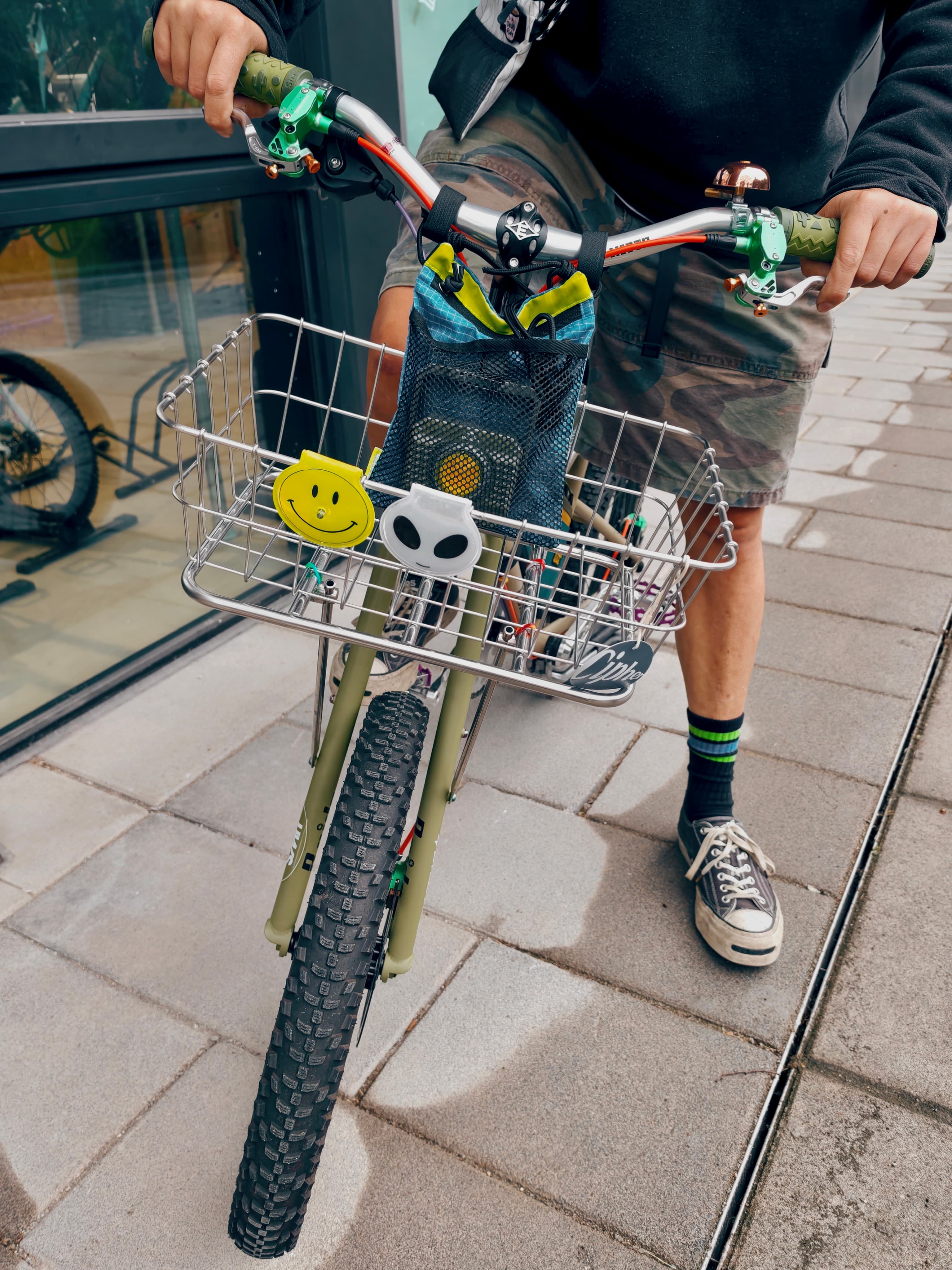
The first part ever bolted to this bike was a Crane brass bell. It sits crooked on the left of the silver riser bar, playing against the olive fork and teal brakes in a retro little colour chord. Building a bike, Mr. Peng says, is no different from opening a shop — the first thing you choose sets the tone. "Whether the bell rings well decides whether the bike has a soul."
Brakes and housing: making the mechanics sweet
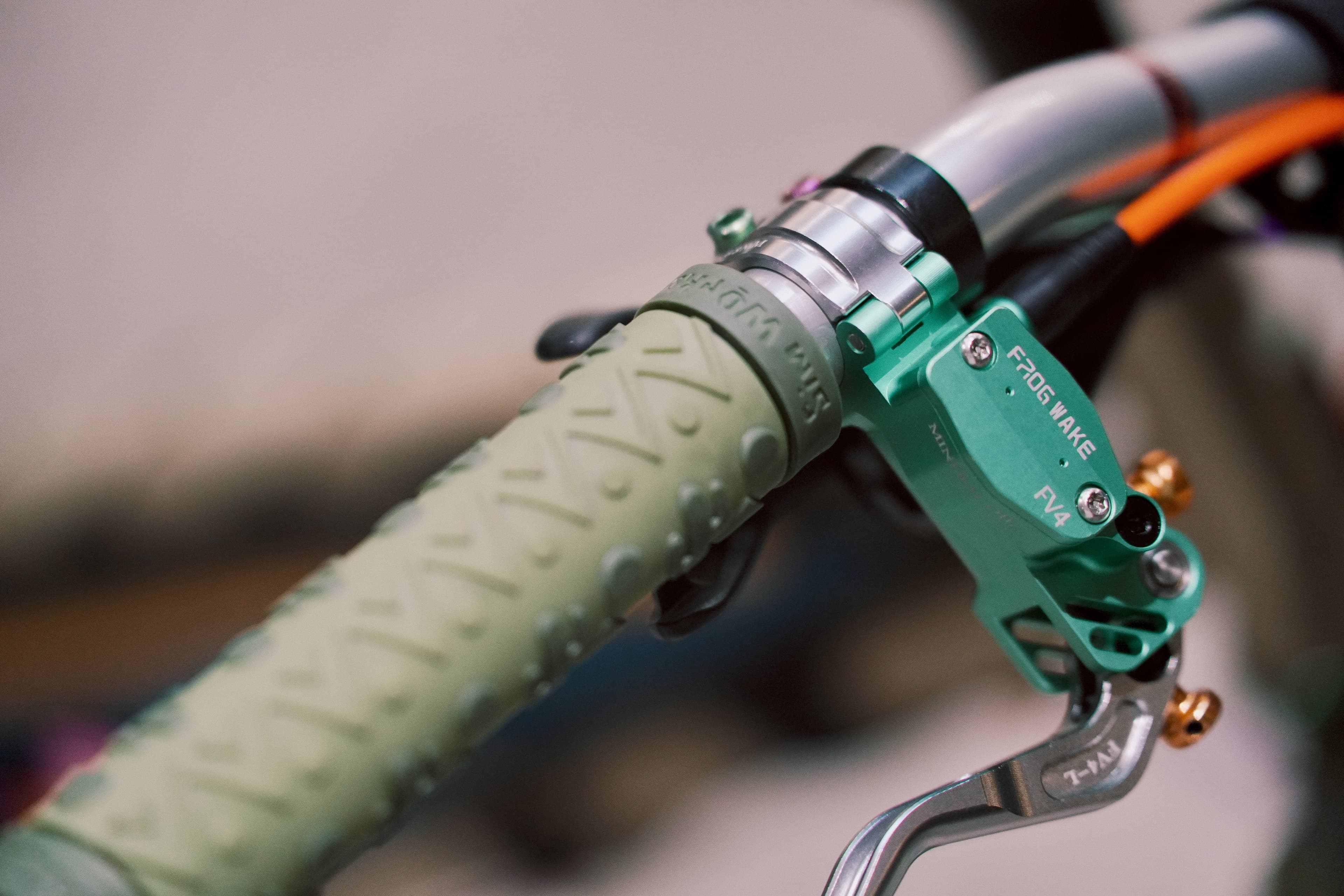
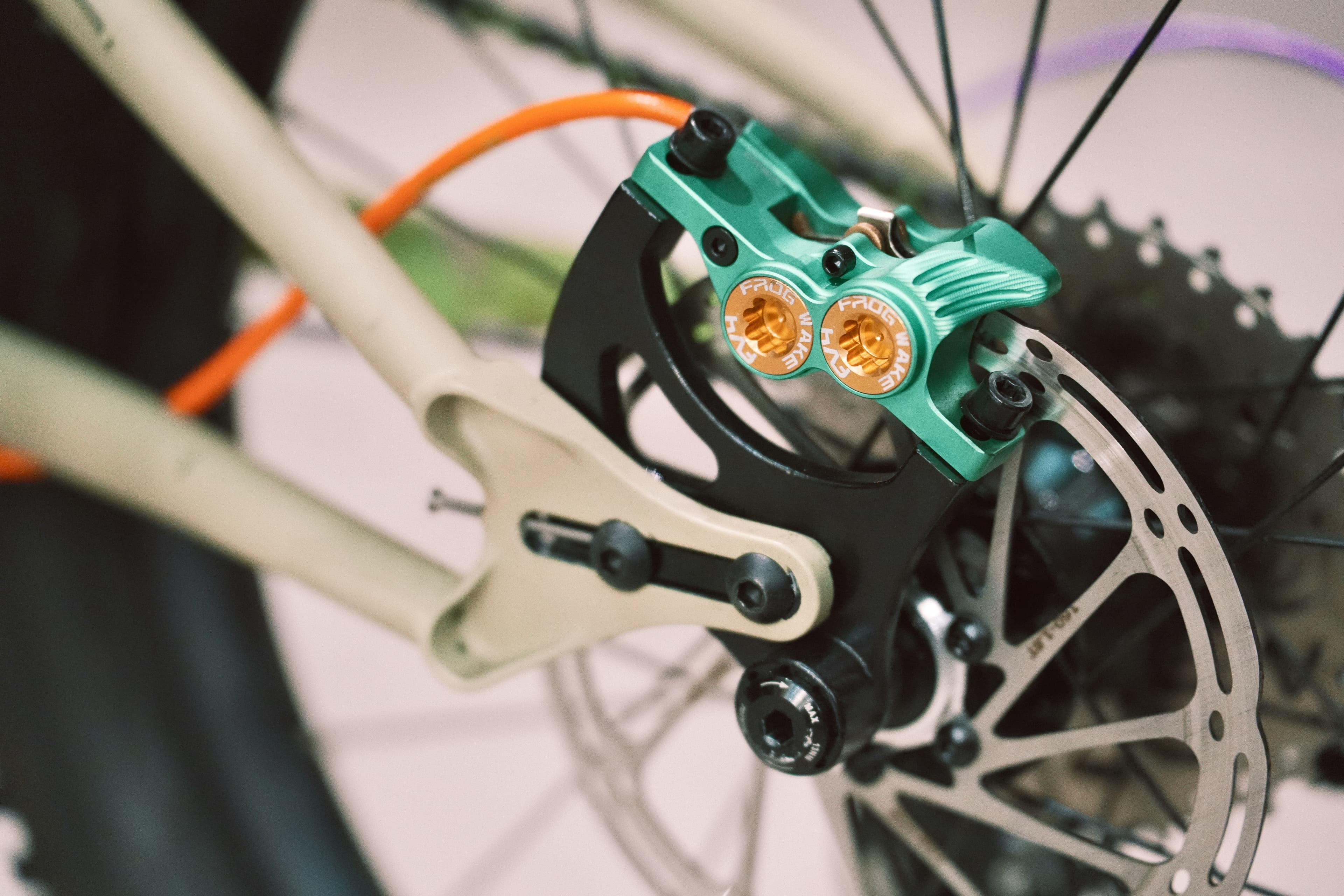
Braking is handled by teal Frog Wake disc calipers, gold pistons glinting inside the bodies. The brake housing is unapologetically orange, and the rear shifter housing switches character entirely, going purple. Against the desert-yellow frame the whole set-up reads like a mint candy pressed into sand — hard-edged mechanics speaking in the loudest colours available. That "mechanical × candy" mash-up is what makes this bike so photogenic.
Drivetrain and pedals: a metal obsession in the details
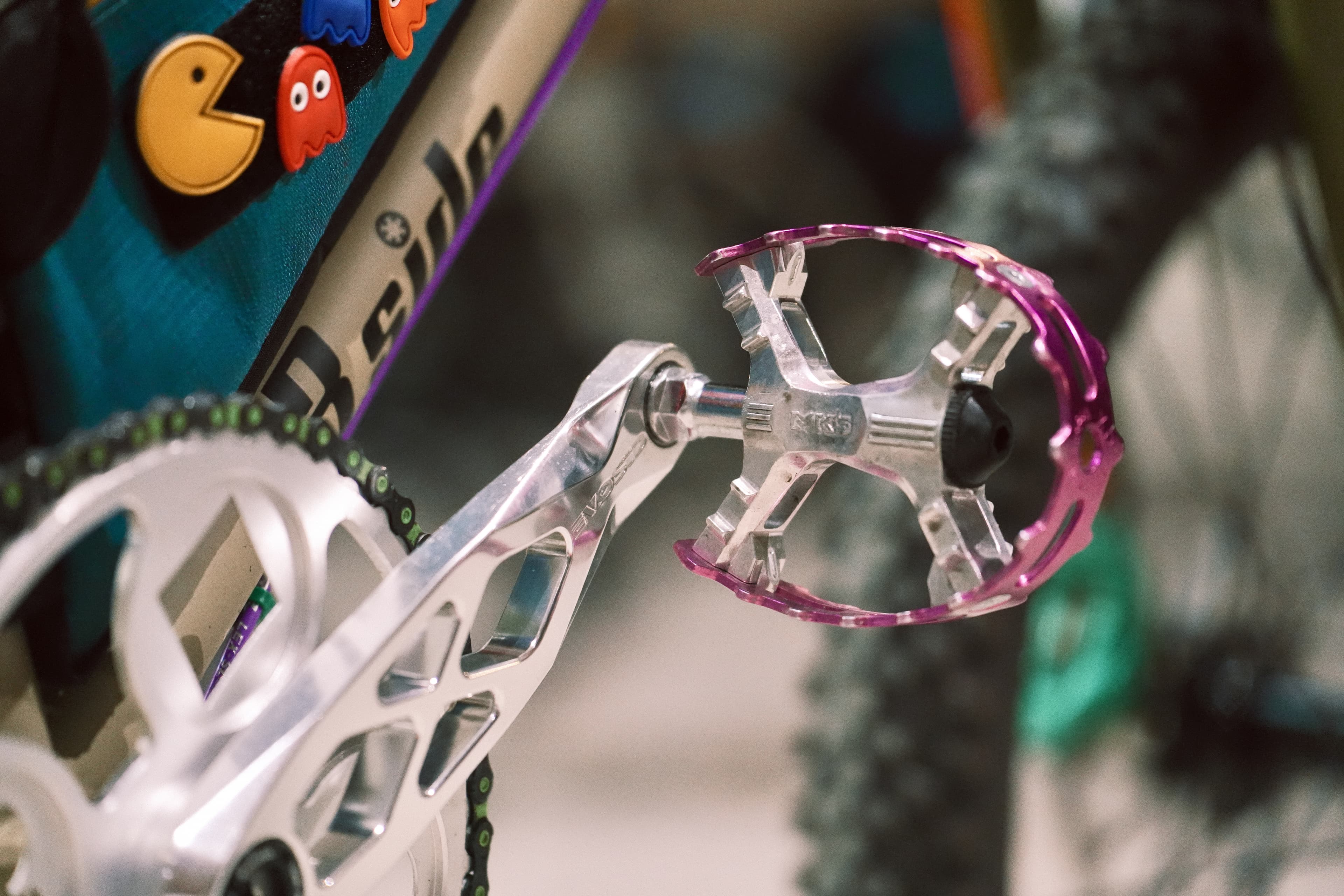
The skeletonised silver cranks are the most flamboyant kind of restraint — the cut-out spider lets the green chain show through behind it, showy to the point of showing off. Answering them is a pair of bright purple MKS pedals. Against a palette of desert and olive, the purple pedals and purple housing call across to each other and pull the scattered colours into one coherent logic.
Frame bag and stickers: wearing your personality
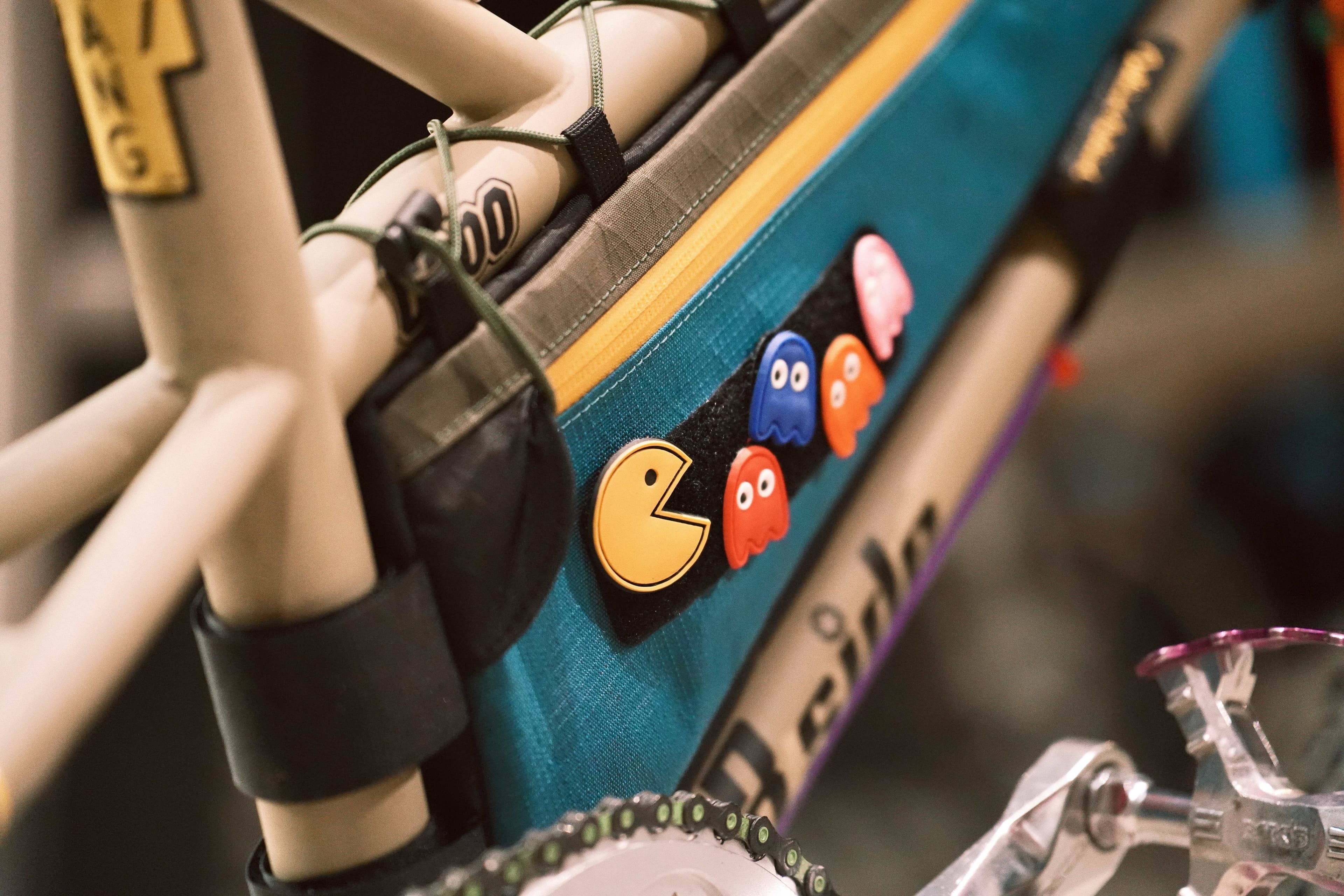
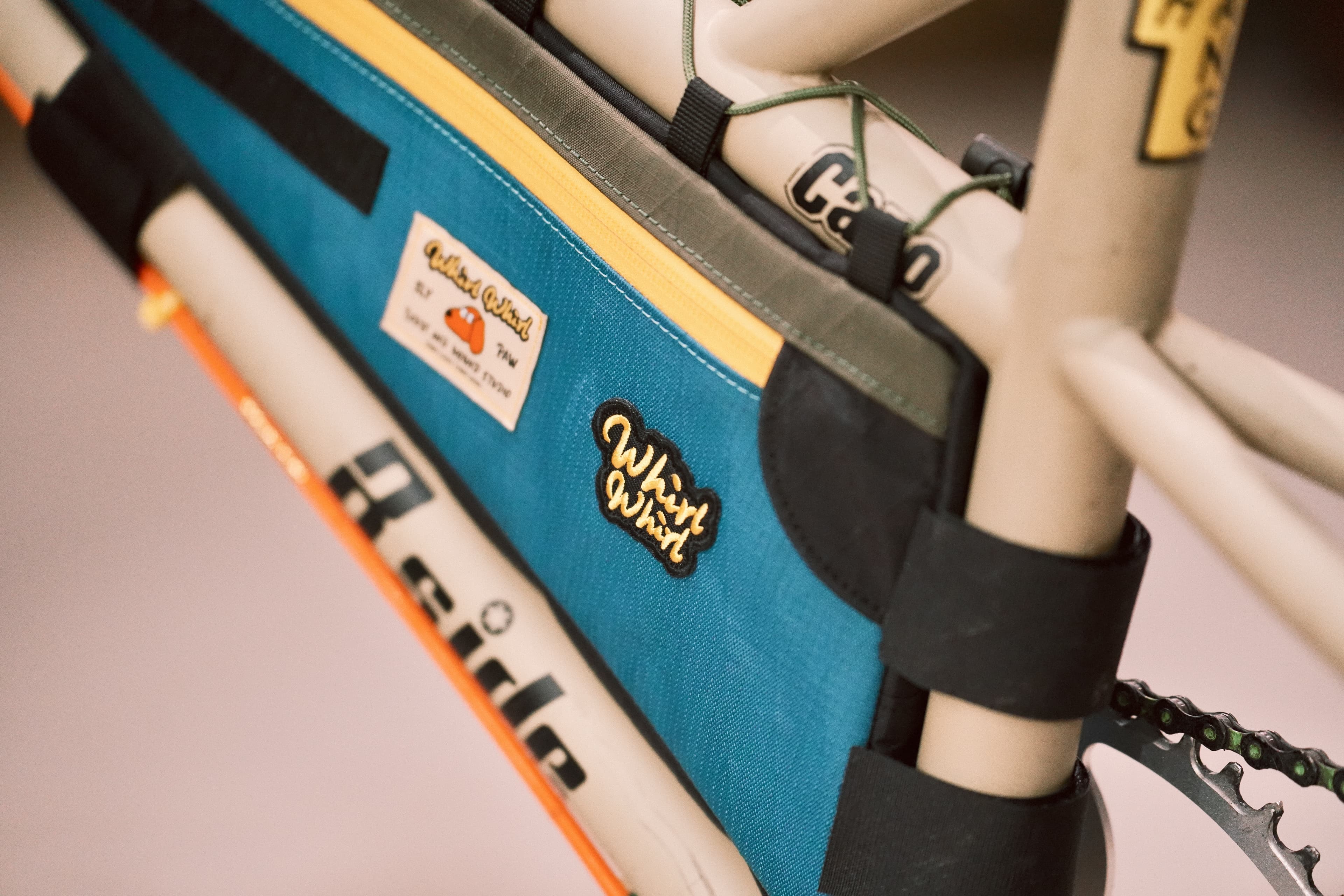
A blue Whirl Wind frame bag is strapped tight between the top and down tubes, and across the black velcro panel Pac-Man and four ghost pins line up in a row — Mr. Peng's sense of humour, and a small private nod to the arcade era. A yellow "SHANGHAI" cross sticker on the seat tube, a Coca-Cola valve cap, the ampm monkey sticker on the bottle: together they declare this bike's residence. It belongs to Shanghai, to ampm, and to every evening it rolls out into.
Basket and rack: built for coffee and a nightcap
Up front, a stainless-steel mesh basket carrying a yellow smiley and a small white alien light; out back, a little purple rack. Together they form Mr. Peng's "everyday cargo system": pick up a bag of fresh beans in the morning, deliver a pour-over to a friend in the afternoon, hang two bottles of craft beer on the way home at night — and never wear a backpack. "Anything the bike can carry, don't carry by hand," he says. "That way your hands stay free for the brakes — and for the cup."
3. The daily ride: a Shanghai timetable on one bike
For Mr. Peng, the riding radius of the Capo is more or less the radius of his life: studio to café is one leg, café to record shop another, and turning into a small bar after dark is the last. Twenty-inch wheels make it quick to change direction in traffic, and a wide-range cassette with all-terrain tires takes the gravel along Suzhou Creek and the occasional kerb out of the equation.
He rides in the rain sometimes, too. "A steel frame doesn't mind a bit of rain — wipe it down and it's fine," he says. "People need a bit of rain sometimes as well." Most days he prefers to set off at dusk: streetlights coming on, the brass bell ringing twice softly through the crowd, coffee still steaming in the front basket. The city is too big, but the right small-wheeled bike can ring-fence the most comfortable corner of it and hold it inside your everyday.
4. The Owner's Verdict: what works, what doesn't
What works
Small wheels plus steel: nimble in traffic, comfortable over brick and stone
Huge freedom with colour — no matter how you build it, it photographs well
Front basket and rear rack mean the everyday load never needs a backpack
What doesn't
Long rides and climbs still call for the road bike; each has its job
Too good-looking — people stop you wherever you park it to ask about it
Wrap Up
From the desert-yellow paint to the purple pedals, from the first ring of the brass bell to the coffee in the front basket, this Capo is close to a physical projection of Mr. Peng's way of living: no chasing ultimate numbers, but not a single detail left unconsidered. As he puts it himself —
"When is a bike finished? No idea. Same as the bean list at the shop — it keeps changing, and it keeps tasting good."
← Back to Selected Builds